10 Counterfeit German Banknotes Hacks All Experts Recommend
The Growing Concern of Counterfeit German Banknotes In current years, counterfeit banknotes have actually ended up being a substantial issue throughout the world, threatening not just individual customers but also the financial integrity of nations. Among the countries facing this illegal activity is Germany, one of Europe's biggest and most prominent economies. Regardless of its sophisticated security measures and robust currency style, counterfeit German banknotes stay a pressing obstacle. This short article digs into the issue of counterfeit German banknotes, examining their impact, detection approaches, and measures taken to fight the issue. The Prevalence of Counterfeit Banknotes in Germany Germany is renowned for having among the most stable currencies worldwide— the euro. Yet, like all currencies, euro banknotes are prone to counterfeiting. According to the European Central Bank (ECB), countless counterfeit euro notes are seized every year, with Germany often ranking amongst the leading nations in regards to occurrences. While counterfeit notes only comprise a small fraction of the total currency in flow, their presence can have disproportionate financial and societal impacts. Counterfeiters typically target high-denomination banknotes, such as the EUR20, EUR50, and EUR100 costs, as these deal the greatest potential return. In time, technological improvements have actually made counterfeiting methods more sophisticated, making it hard for the average person to differentiate between authentic and fake money. How Counterfeit Banknotes Impact Society The damage triggered by counterfeit banknotes surpasses financial losses. It impacts different stakeholders, consisting of customers, organizations, and federal governments, in numerous methods: Economic Losses When counterfeit money enters the economy, unsuspecting individuals or companies frequently bear the financial loss. When a counterfeit costs is determined, it can not be exchanged for legal tender, leaving the holder expense. Damage to Consumer Trust The presence of fake banknotes can erode public trust in the monetary system. If counterfeit occurrences become widespread, individuals might end up being overly mindful or reluctant to accept money deals. Weakening Businesses Services that unsuspectingly accept counterfeit money may face monetary losses or logistical difficulties, such as needing to commit resources to train workers on detecting fake notes. Increasing the Shadow Economy Counterfeiting is frequently linked to organized criminal activity. By producing and dispersing counterfeit notes, criminal organizations fund other unlawful activities, such as drug trafficking and human smuggling. How to Identify Counterfeit German Banknotes Thankfully, the ECB has incorporated a number of innovative security features into euro banknotes to make counterfeiting as difficult as possible. By comprehending and using these functions, both people and services can safeguard themselves from succumbing to counterfeit money. Key Security Features to Check: Feel the Paper Authentic euro notes are printed on cotton-based paper, making them long lasting and a little textured. Counterfeit expenses are often printed on normal paper or products that feel smoother. Tilt the Note Euro keeps in mind integrate holographic functions. When tilted, the hologram patch or strip on the front of the note must display changing images or colors. Examine the Watermark Hold the banknote up to the light. Real euro notes consist of a watermark that ends up being noticeable and shows the banknote's value and a picture of Europa, a figure from Greek folklore. Amplify euro falschgeld kaufen on genuine euro notes is crisp and clear, even under zoom. On fakes, the text might appear blurred or inconsistent. Usage UV Light Under ultraviolet light, genuine euro banknotes display security threads, vibrant features, and patterns. Counterfeit costs may either radiance unnaturally or do not have these components altogether. Germany's Efforts to Tackle Counterfeit Banknotes Germany has not disregarded to the counterfeit banknote issue. The country utilizes a multi-faceted approach to minimize the circulation of fake currency. Key Interventions Include: Technological Advancements Germany works closely with the ECB to execute innovative security functions in banknote designs. The most current euro series, the “Europa Series,” incorporates enhanced holographic images, microtext, and color-shifting impacts. Public Awareness Campaigns Educating the public plays an essential role in combating counterfeiting. German authorities routinely arrange projects to teach people how to spot counterfeit notes. These campaigns often include posters, videos, and online guides. Training for Businesses Banks, sellers, and other organizations in Germany are supplied with training programs to familiarize staff with counterfeit detection strategies. Police Crackdowns German law enforcement companies operate in cooperation with Europol and Interpol to recognize and dismantle counterfeiting networks. State-of-the-art forensics are used to trace the origin of counterfeit notes and prosecute the culprits. Regularly Asked Questions (FAQs). 1. Is it illegal to unintentionally use a counterfeit banknote? If an individual unknowingly uses a counterfeit note, they normally can not be held criminally responsible. However, they might still deal with the monetary loss, as counterfeit currency can not be exchanged for legal tender. 2. What should I do if I think I've gotten a counterfeit note? If you believe a banknote is counterfeit, you ought to instantly report it to the closest bank or law enforcement authority. Prevent returning it to the individual who offered it to you, as this may be thought about fraud. 3. Can counterfeit-detector pens reliably determine fake notes? While counterfeit-detector pens can supply some sign of authenticity, they are not sure-fire. Examining numerous security functions is the most trustworthy technique. 4. Are EUR500 notes more most likely to be counterfeit? The EUR500 note has frequently been related to prohibited activities due to its high value and has actually been discontinued for production. Nevertheless, they are still legal tender, and while counterfeit EUR500 notes exist, other denominations like EUR20 and EUR50 are more commonly targeted. 5. Who oversees the design and security of euro banknotes? The European Central Bank (ECB) and the national main banks of the Eurozone, consisting of Germany's Bundesbank, are responsible for designing and preserving the security functions of euro banknotes. Actions to Stay Protected from Counterfeit Money. 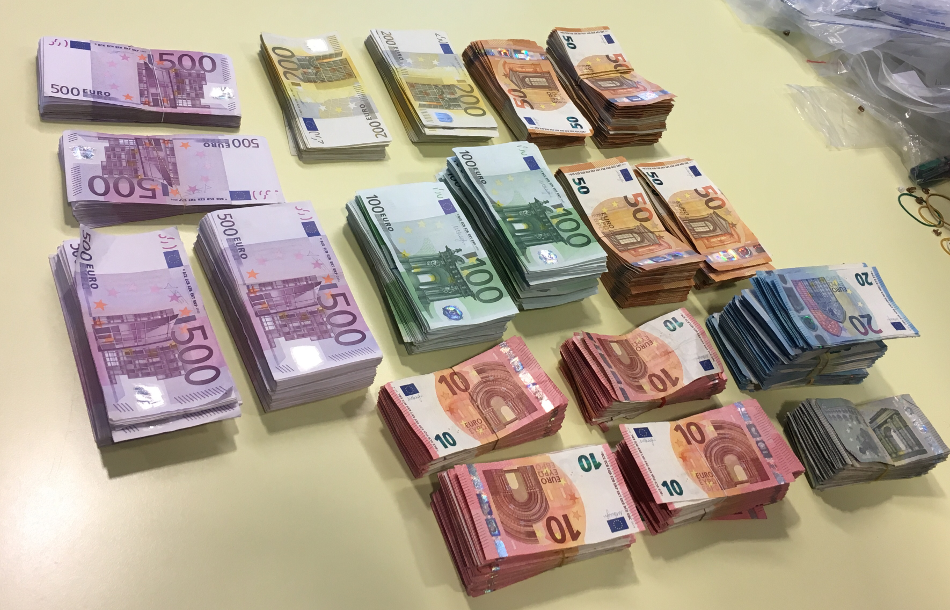 You can take proactive steps to guarantee you're not unintentionally accepting or dealing with counterfeit banknotes:. Discover to acknowledge the key security features of authentic euro notes. Stay cautious when receiving big quantities of money, especially in high-value denominations like EUR50 and EUR100. Usage counterfeit-detection tools such as magnifiers, UV lights, or scanners for included assurance. Watch out for cash deals in casual settings, street markets, or online sales where threats are higher. Conclusion. Counterfeit German banknotes remain a real threat to customers and services, in spite of the innovative security steps included into euro styles. While counterfeit notes are only a little fraction of the currency in blood circulation, their influence on monetary losses, public trust, and organized criminal activity is considerable. By finding out to identify fake banknotes and remaining alert, people and organizations can help mitigate the risks. In addition, through a mix of technology, public education, and rigid law enforcement, Germany continues to lead the charge in securing its currency and protecting its citizens. Acknowledging and dealing with the problem of counterfeit banknotes isn't just a matter for governments— everybody has a role to play in ensuring the stability of their nation's currency.